
Applying for scholarships can be overwhelming, but being prepared can make the process smoother. Here’s a guide on what to be on the lookout for while searching for scholarships, and what materials you should have on hand to make the process easier.
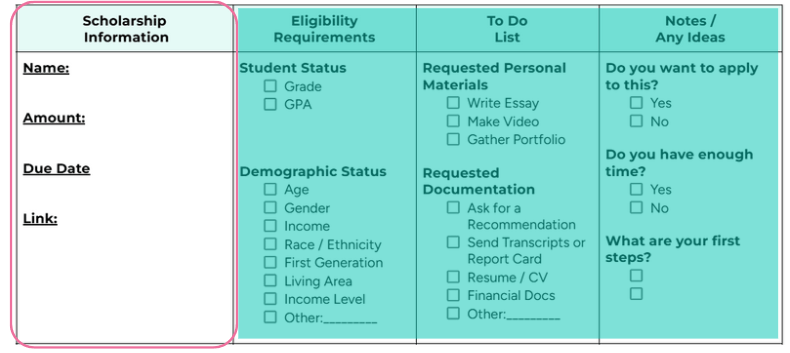
Scholarship Information
While searching for scholarships, you’ll start to come across different scholarships that will catch your eye. The first thing you’ll want to ask yourself is, “What is the basic information that I can gather about the scholarship?” This will be information that will help you be able to find the scholarship again. This include the name of the scholarship, a link to the scholarship, the scholarship deadline, and the scholarship award amount.
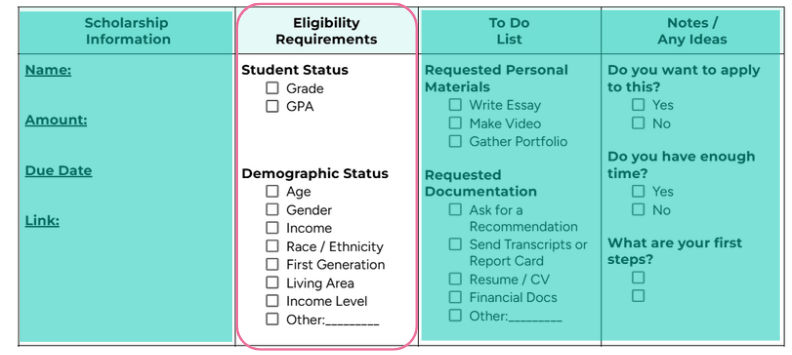
Eligibility Requirements
Next, you’ll want to begin looking into the requirements needed to apply. Here, you’ll ask yourself, “Am I able to apply in the first place?” Some scholarships ask that their applicants to meet minimum GPA requirements, like a 3.0 GPA. Other scholarships may ask their applicants to be a certain age or grade level, such as scholarships that only accept high school students. Different scholarships will have different requirements for their applicants. Be sure that you meet their minimum requirements in the first place.
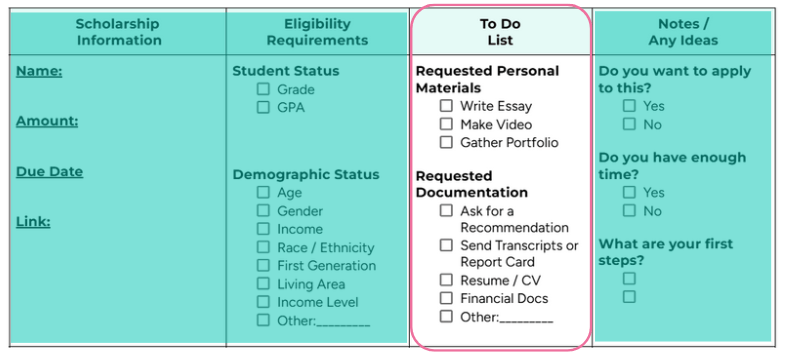
To-Do List
At this point, you will begin to see if there is anything that the scholarship application is asking you to submit. “What do I need to do to submit a complete application?” There are a few documents that you’ll typically see requested in a scholarship application. Start by gathering these essential documents and information that most scholarship applications require. Typically, applications will ask for:
- Letters of Recommendation: Ask teachers, mentors, or supervisors for letters well in advance. Having a few ready, or at least notifying those you would like to ask, will save time when you find a scholarship to apply for.
- Academic Transcripts: Make sure you have copies of your high school or college transcripts readily available.
- Resume or CV: Highlight your educational background, work experience, extracurricular activities, and volunteer work.
- Activity Descriptions: Be prepared to detail any past jobs, extracurricular activities, or community service you’ve been involved in.
- Financial Information: You may need to provide details such as FAFSA forms or your parents’ income information.
By having all of these gathered into one place and readily available to you, you’ll already be ready to meet the submission requirements for a number of different applications.
Outside of what applications typically ask for, there may be scholarships that ask for additional materials. Scholarship applications can take various formats with specific requirements. For example, some may ask for a video, an essay, or an art submission:
- Essay Applications: Many scholarships ask for essays. Prepare a few general essays about your background, goals, and achievements, then tailor them for specific scholarships. Typically there are common theme, prompts, and questions across different essays.
- Video Applications: If the scholarship requires a video, outline your talking points, practice your speech, and ensure you have a device (such as a camera, phone, tablet, or laptop) to record your submission.
- Art Portfolios: For scholarships in creative fields, you’ll need a portfolio of your best work. Make sure it’s well-organized and showcases a variety of skills.
Create a checklist of all the materials you need, and keep digital and physical copies of your documents. For example, a folder in your Google Drive is an excellent place to keep and track your documents, while also having printed copies on hand. Organize them by application deadlines to avoid last-minute stress. And remember, if something is asked of you once, it is likely to be asked of you again.
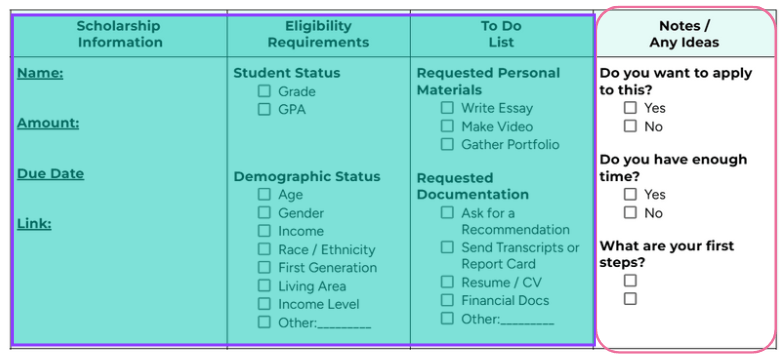
Notes/Ideas
By this stage, you should have all of the information that you need to know about the scholarship you are interested in. And now you’ll want to ask yourself, “Do I want to apply to this?” Do you meet the requirements? Will you be able to get you materials ready and submitted by the deadline? What would be your first steps? You should consider everything you know about the scholarship as well as what you know about yourself, and determine if you are ready to put in the work to get an application completed.
Conclusion
Searching and applying for scholarships can be a long and busy process. So use this guide to help you stay clear, organized, and on track during that process!
 DJ's Village